Flagship project — engineering log

CropSCOUT:
three subsystems,
one field robot.

We are building CropSCOUT as three subsystems that bolt together on one base: a tracked undercarriage, an ML / AI crop-vision stack, and a precision sprayer. This page is the evidence — the working MVP, the boards we designed, the CAD, the disease-detection model you can try, and the money and plan behind it.

MVP — tested & validated $3,000 funding received so far 7-PCB distributed system Backed by UzCombinator · Batch 2, 2026
watch the MVP demo → GitHub try disease detection →
01 — What we are building

Three subsystems

Each subsystem is owned by a founder, has its own hardware and its own test. They meet at one mechanical interface, one 24 V bus, and one CAN network.

01

Undercarriage

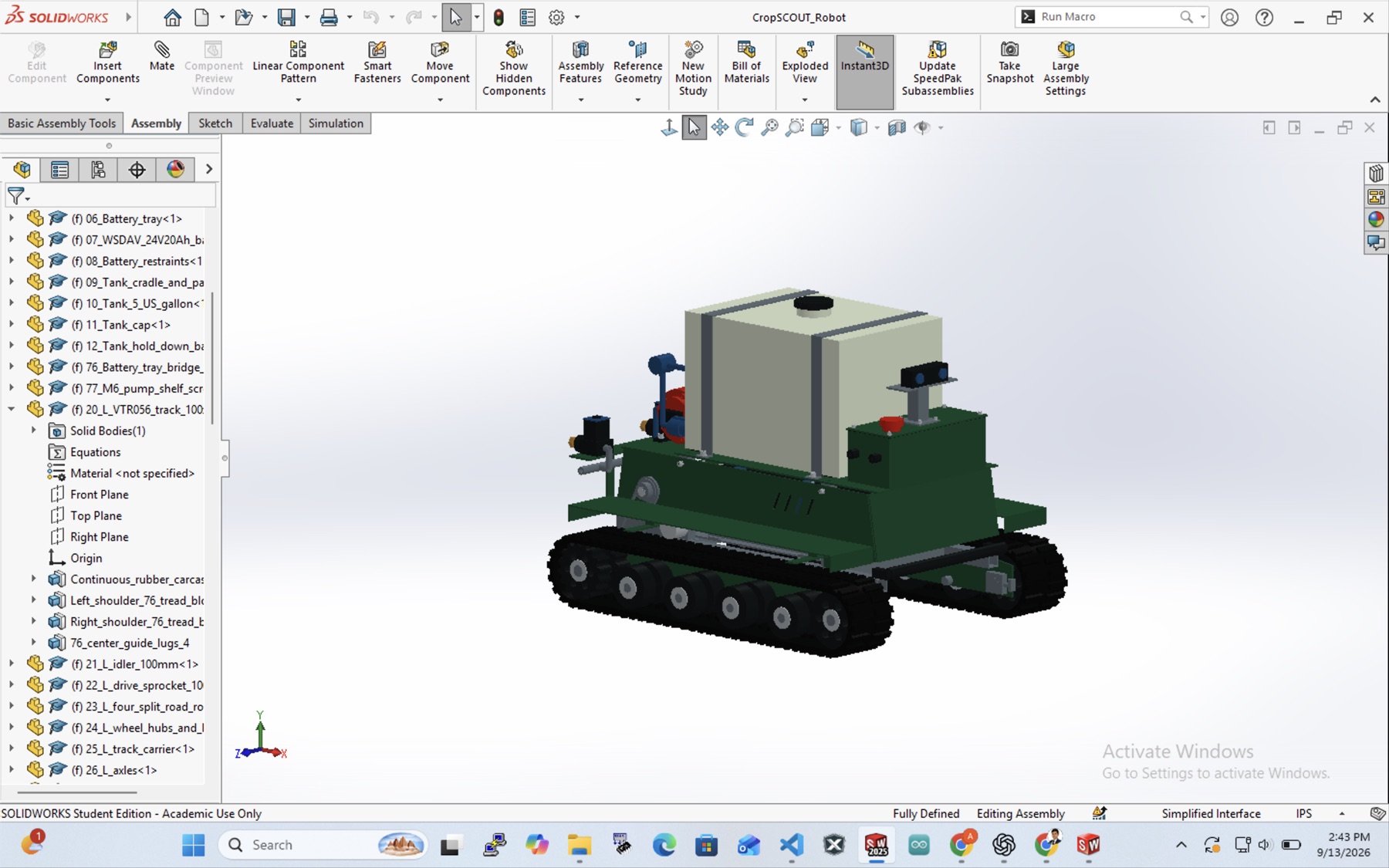
Tracked drivetrain sized for greenhouse rows and wet soil. Full SolidWorks assembly: track carriers, idlers, drive sprockets, split road rollers, hubs and axles on a welded frame with battery tray and 24 V 20 Ah pack.

CAD model ↓
Status: CAD frozen · fabrication in progress
02

ML / AI

CropSCOUT Vision: crop and leaf detection plus disease screening, running as ONNX models in the browser today and on the robot's compute next. Screens tomato, cucumber, apple and lemon, and shows the image evidence behind every score.

Disease detection ↓
Status: live model · experimental screening
03

Sprayer

Precision spraying module on the same base: 5 US-gallon tank, 24 V pump on its own shelf, solenoid valves and nozzle boom, dosed per plant from what the vision stack sees.

Sprayer ↓
Status: in CAD · parts ordered
3subsystems
$3kfunding received so far
7custom PCBs in the MVP
30farmers interviewed
02 — The MVP

Working prototype, demoed in public

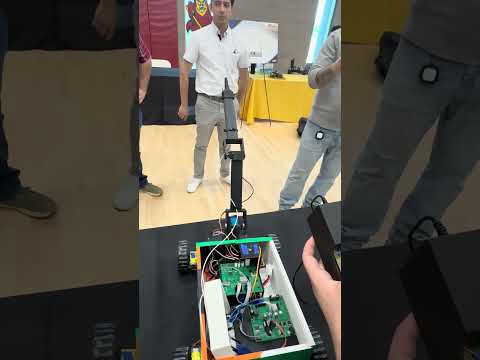
A real, driving, sensing rover — steerable 4-wheel base, controllable front arm, soil & air sensing, and a wireless controller talking to it over MQTT. Built and presented at the ASU Fulton Innovation Showcase in front of 500+ people.
CropSCOUT MVP demo video
CropSCOUT MVP demo — real prototype, tested & validated, presented at the ASU Innovation Showcase · Watch on YouTube →
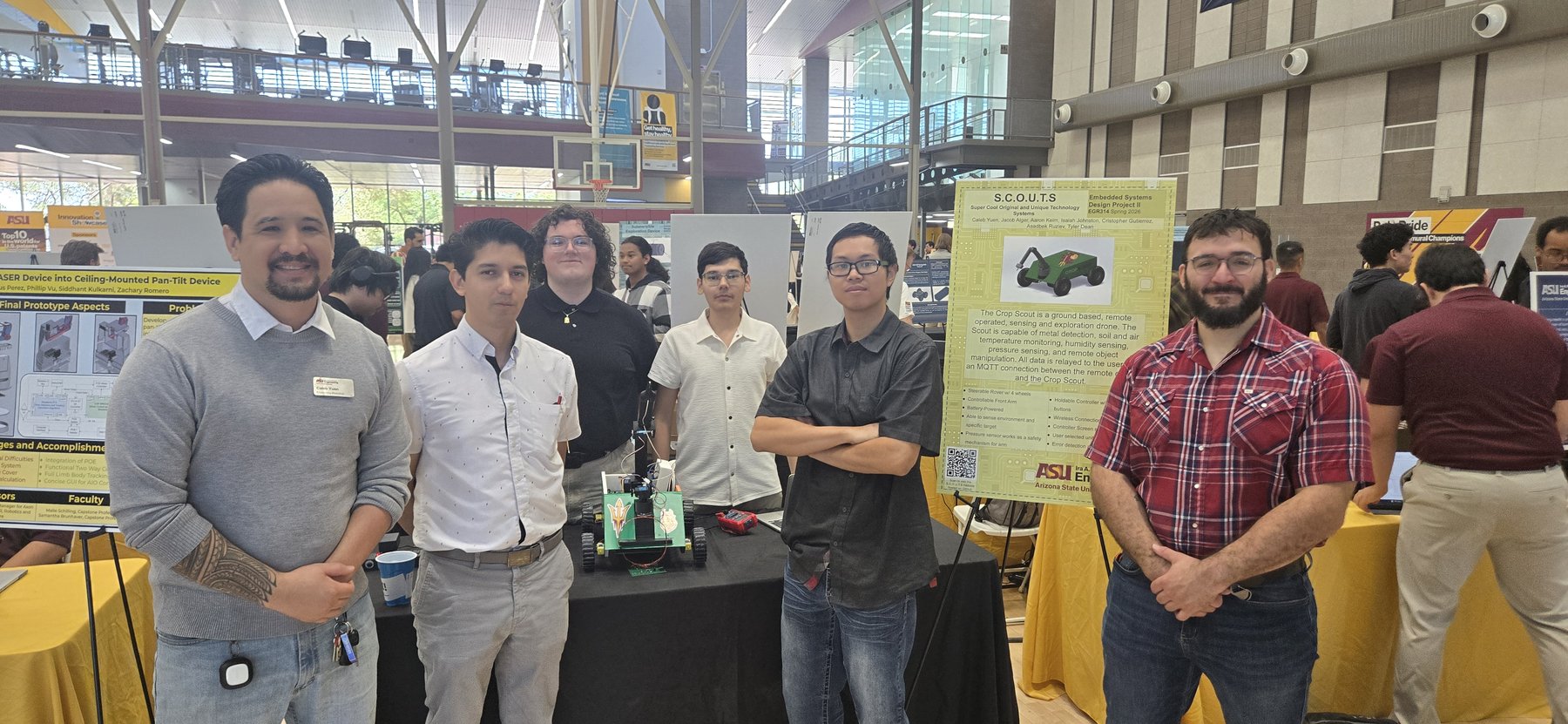
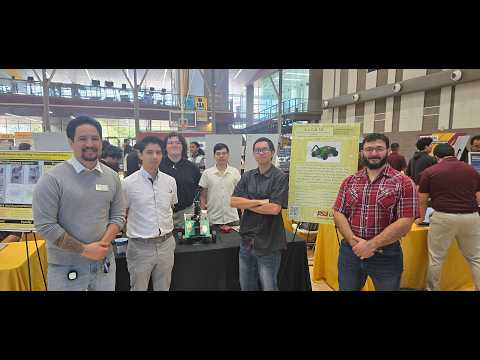
CropSCOUT rover team at the ASU Fulton Innovation Showcase
Innovation Showcase — the rover on the table, poster behind it
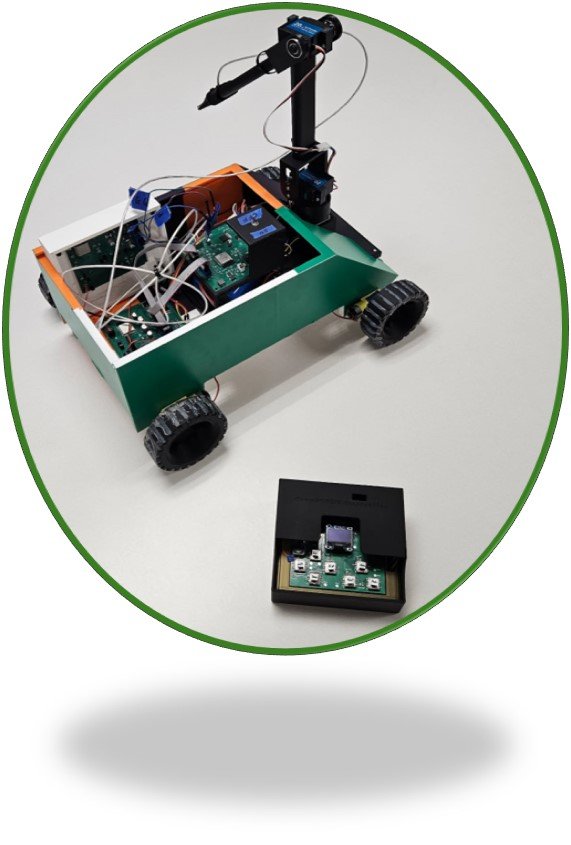
CropSCOUT MVP rover with front arm and wireless controller
The MVP rover and its wireless controller
03 — Subsystem 01 · Undercarriage

The field-scale base, in CAD

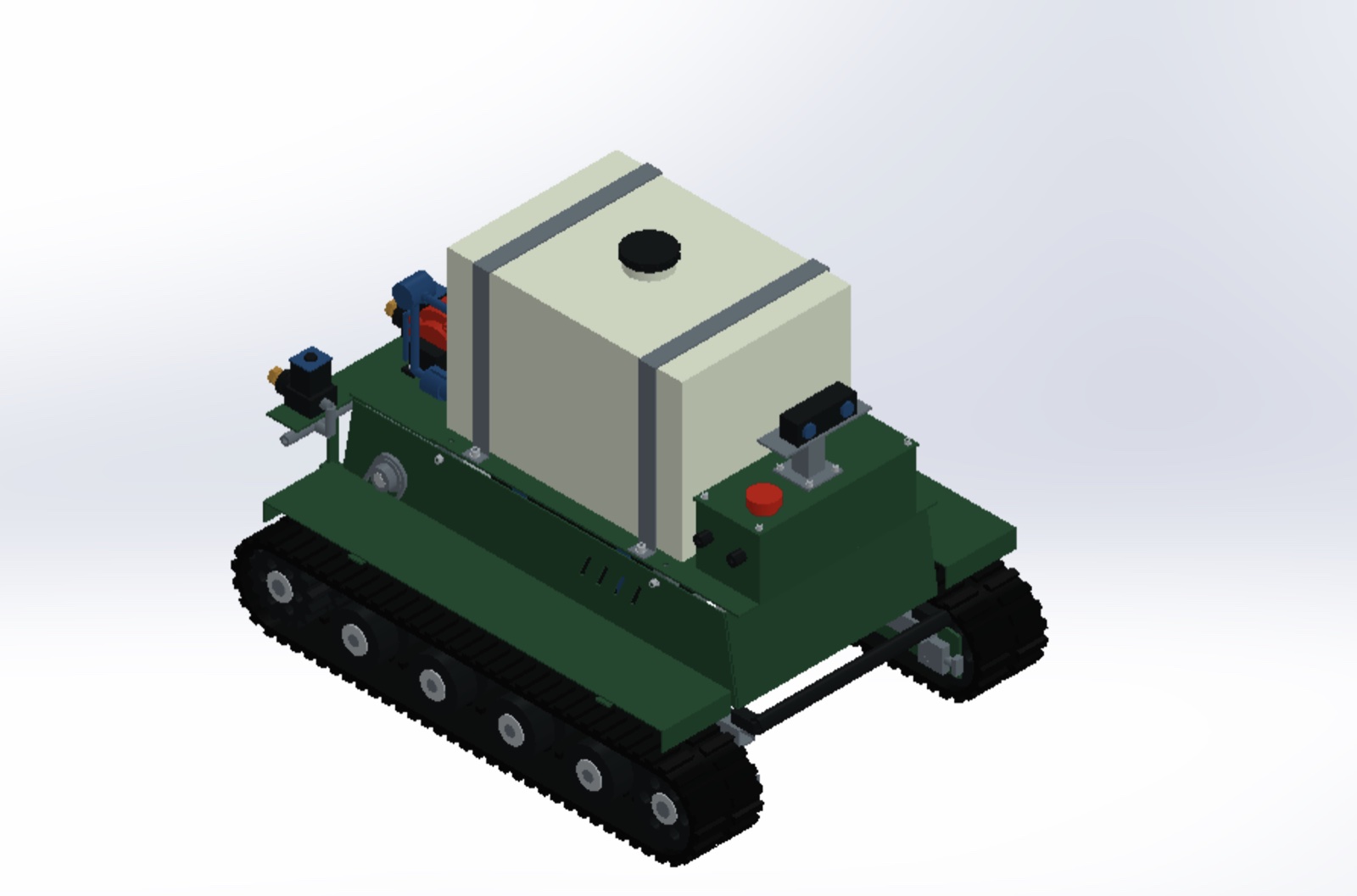
The MVP was a four-wheel rover the size of a suitcase. Farmers told us to make it bigger and let it carry more than one tool, so the V2 base is a tracked undercarriage designed from scratch in SolidWorks.

The assembly is fully defined: VTR056 rubber tracks on 100 mm idlers and drive sprockets, four split road rollers per side, machined wheel hubs and axles, a track carrier each side, a battery tray with restraints for the 24 V 20 Ah pack, tank cradle and hold-down bars, and a pump shelf for the sprayer module.

  • Low centre of gravity: tank and battery sit inside the frame, not on top of it.
  • Every attachment mounts to the same top plate — sprayer first, weeding module next.
  • Motor nodes move from UART to CAN bus on a Teensy 4.1 controller.
CropSCOUT V2 CAD render — tracked undercarriage with spray tank
CropSCOUT V2 — tracked base with the 5-gallon tank and camera mast
SolidWorks assembly of CropSCOUT_Robot showing the feature tree: battery tray, 24V 20Ah battery, tank, track, idlers, sprockets, road rollers
SolidWorks assembly CropSCOUT_Robot — fully defined; feature tree shows battery tray, 24 V 20 Ah battery, 5-gallon tank, tracks, idlers, sprockets and road rollers
04 — Subsystem 02 · ML / AI

Disease detection you can try

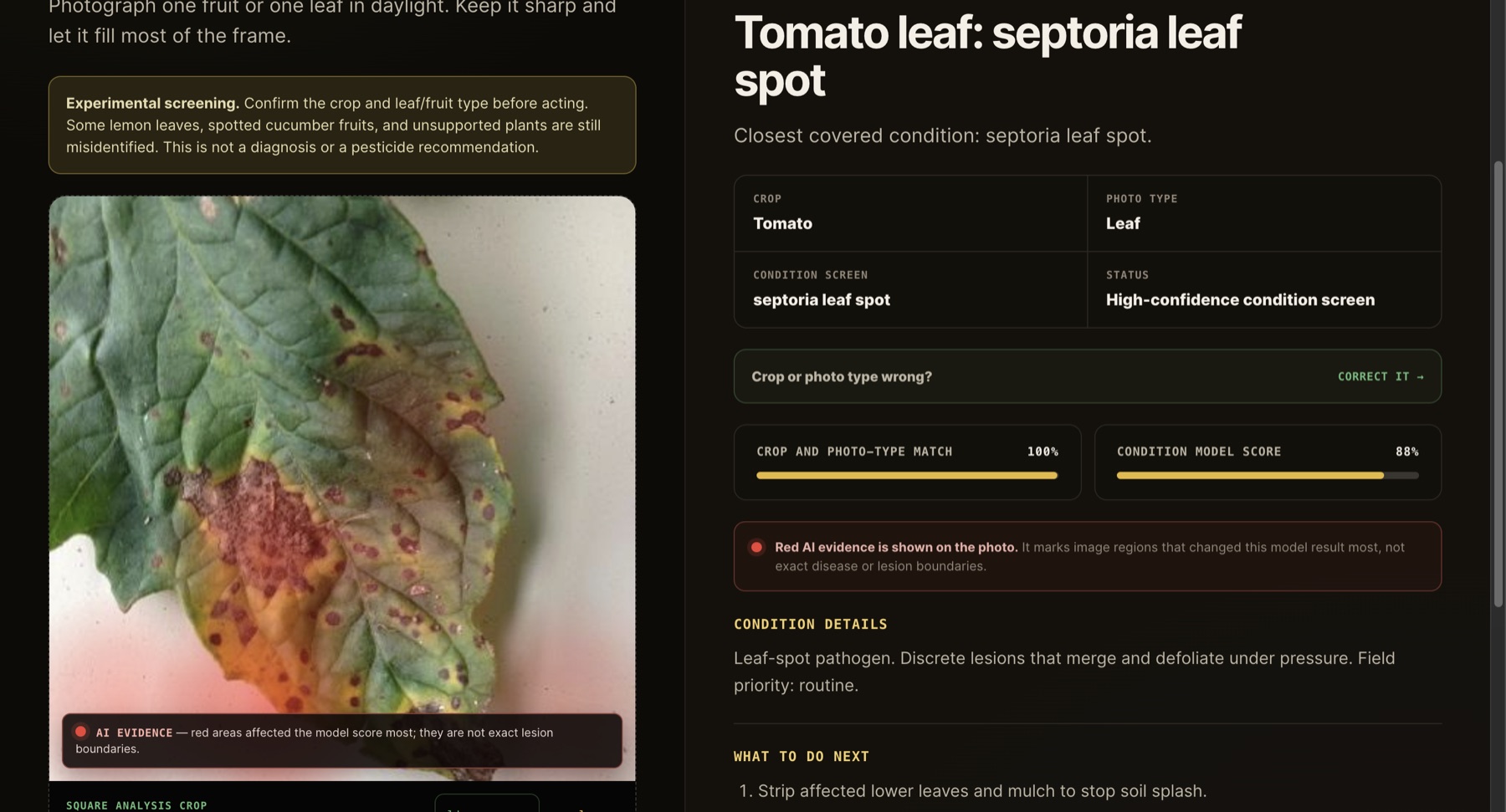
CropSCOUT Vision result: tomato leaf, septoria leaf spot, with AI evidence heat-map on the photo
CropSCOUT Vision — tomato leaf screened as septoria leaf spot, 88% condition score, evidence overlay on the photo · open the tool →

CropSCOUT Vision is the ML / AI subsystem, running today as a web tool and next on the robot's onboard compute. Photograph one leaf or one fruit and it runs two stages:

  • Crop & photo-type gate — is this a tomato, cucumber, apple or lemon, and is it a leaf or a fruit? A whole fruit is identified but never given a leaf disease.
  • Condition screen — the closest covered condition for that crop, with a confidence score, alternatives, and a red AI-evidence overlay showing which regions moved the score.
  • What to do next — field priority and first actions, written for the grower, not the lab.

Models are exported to ONNX and run in the browser with ONNX Runtime Web, so photos never leave the phone. We judge every model change against our own field photographs, not the validation split — that is where the studio-heavy public datasets fall over.

This is experimental screening, not a diagnosis or a pesticide recommendation. The tool asks for the team password while the model is in evaluation.

open CropSCOUT Vision →
05 — Subsystem 03 · Sprayer

Precision spraying, per plant

Spraying was the second-largest time cost and the single largest cash cost our farmers named. The sprayer module is what CropSCOUT does first with the base and the vision stack.

  • 5 US-gallon tank in a cradle with hold-down bars, filled and rinsed through the top cap.
  • 24 V diaphragm pump on its own shelf, fed from the same pack as the drivetrain.
  • Solenoid valves and nozzle boom switched per nozzle, so a plant flagged by Vision gets dosed and its healthy neighbour does not.
  • Dose, pressure and litres-per-row logged to the farmer's phone with the rest of the telemetry.

Once the sprayer is proven in the field, the next module on the same top plate is automated weeding — the job 14 of 30 farmers named as their single largest time cost.

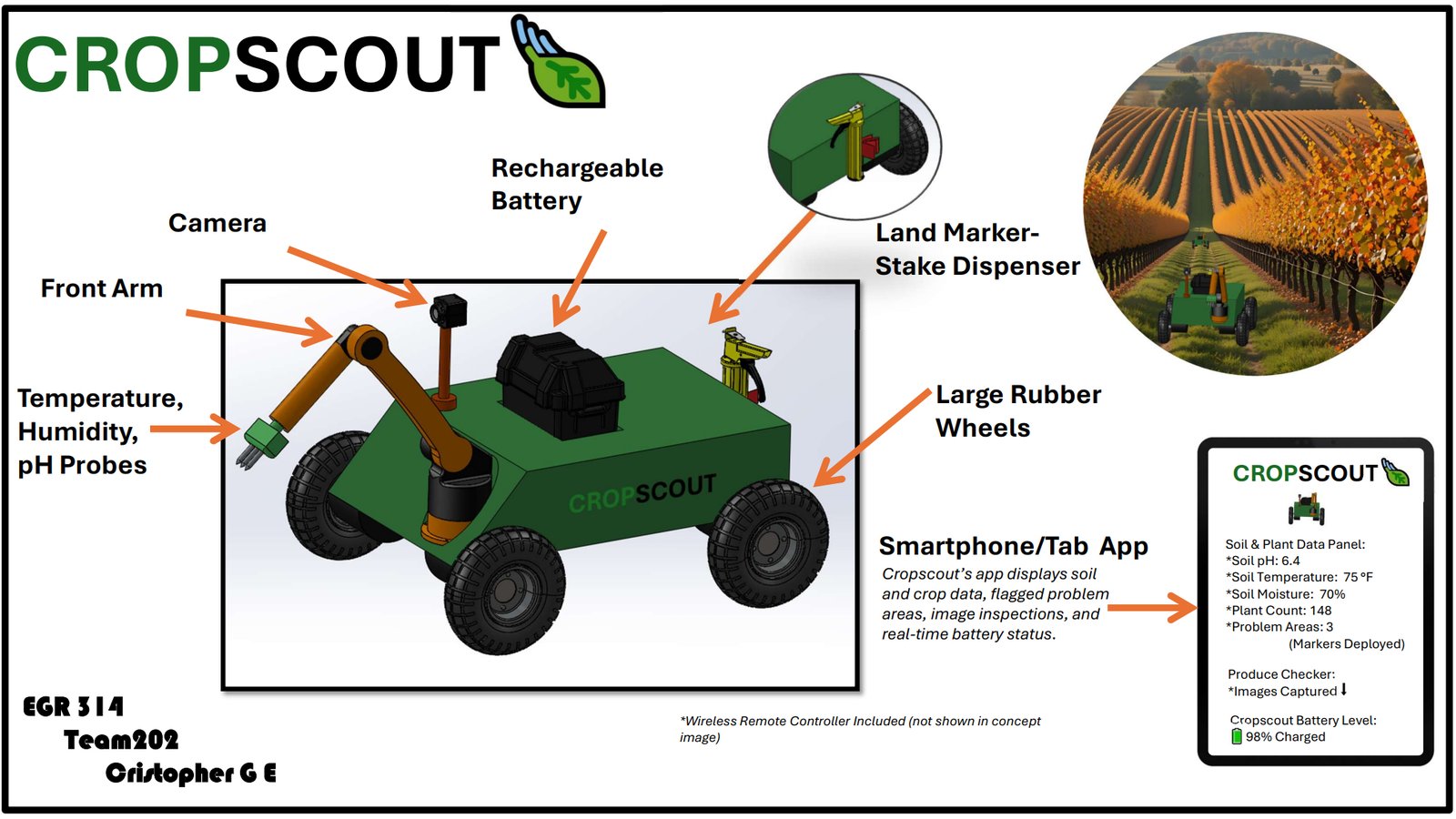
CropSCOUT concept design — front arm, camera, probes, battery, marker dispenser, app
Concept design — the interfaces the sprayer, camera mast and probes share on one base
06 — Electronics

Our own PCB stack

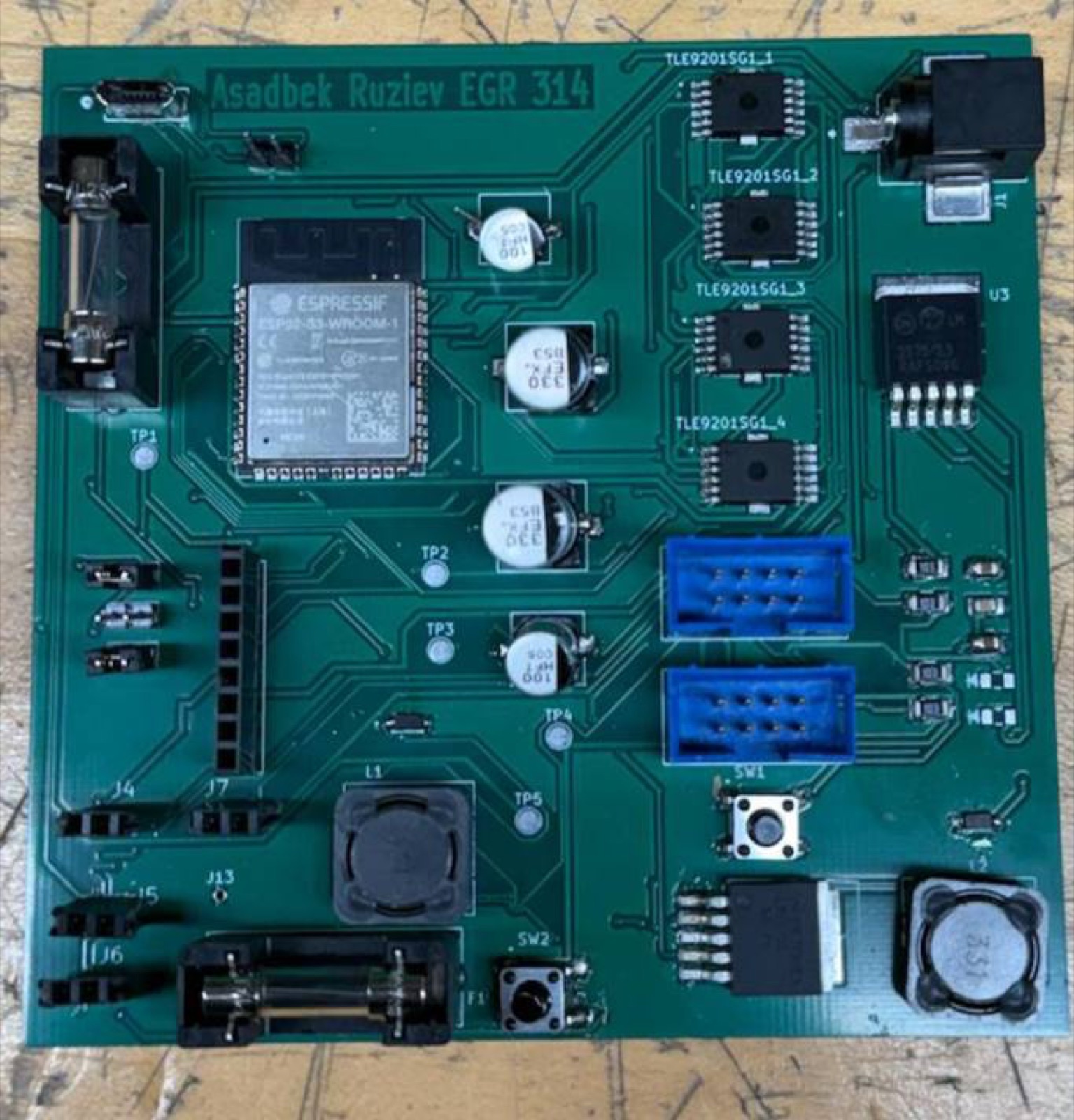
CropSCOUT motor-driver PCB, assembled: ESP32-S3-WROOM-1 and four TLE9201SG H-bridges
Motor-driver node, assembled and tested — ESP32-S3-WROOM-1, 4× TLE9201SG H-bridges, LM2596S / LM2575 regulators

Every PCB in the MVP was designed and assembled by us — schematic, layout, fabrication, bring-up and debugging.

The board pictured is the motor-driver node: an ESP32-S3 driving 4× TLE9201SG H-bridges over SPI, taking 5–40 V in and regulating to 3.3 V and 5.5 V on board. It is one of the 7 PCBs in the rover's distributed architecture; Asadbek led the wheel-motor subsystem. Firmware is MicroPython: MQTT over TLS for commands and telemetry, a UART daisy chain to the other boards, closed-loop control of the four motors.

Next revision: the main controller moves to a Teensy 4.1 — more headroom, CAN bus, real-time control — and a Jetson-class module joins the stack so Vision runs onboard.

schematic, layout & firmware on GitHub PCB datasheet →
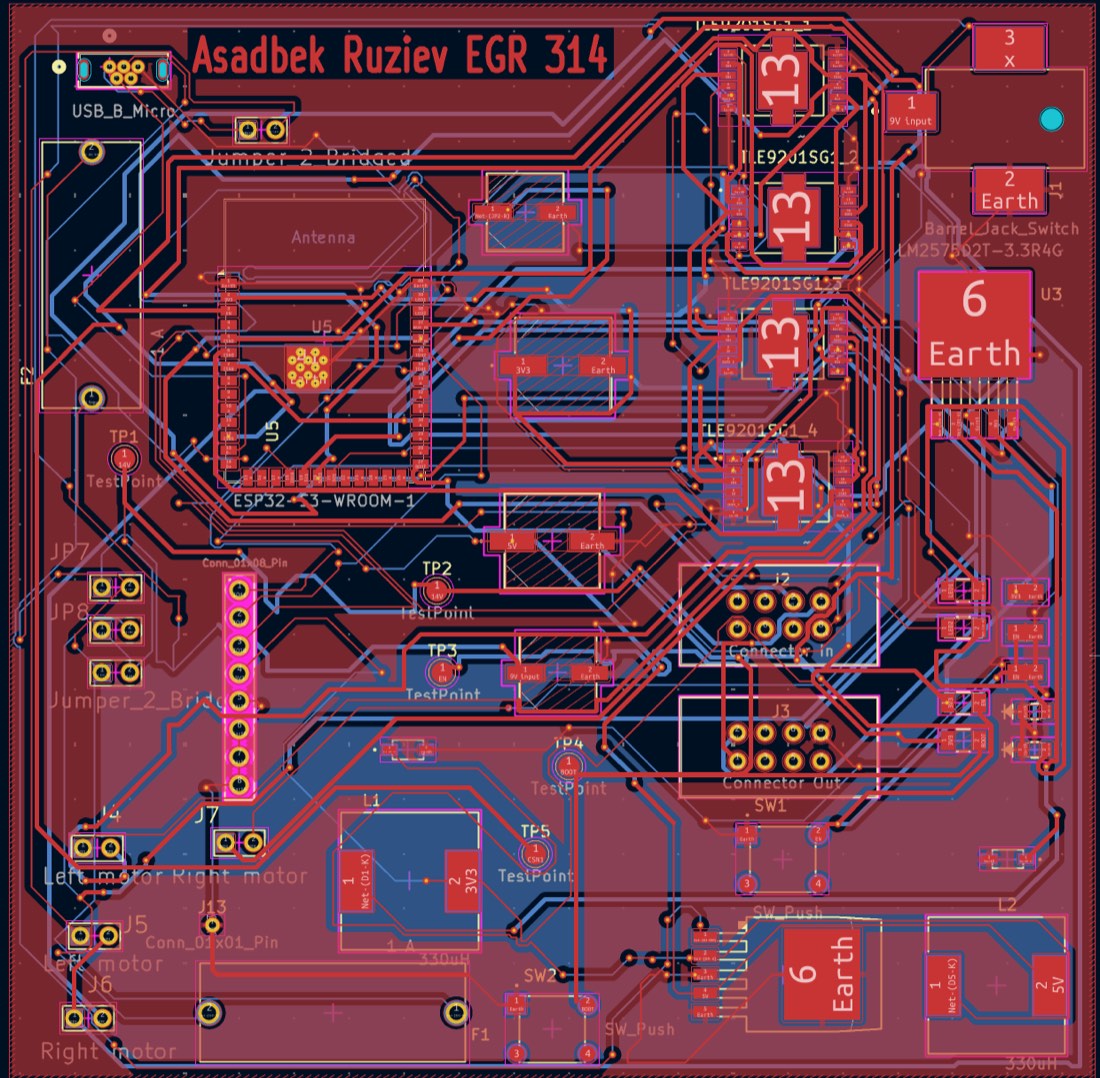
KiCad PCB layout of the CropSCOUT motor-driver node
The same board in KiCad — two-layer layout, four H-bridge channels, fused motor outputs, test points
CropSCOUT motor drive demo over UART
Bench demo — drive over UART · Watch on YouTube →
07 — Funding & links

Where the money and the work live

$3,000funding received so far

Every dollar so far has gone into hardware: track parts, the 24 V pack, pump and tank, PCB fabrication and the components on them. CropSCOUT is backed by UzCombinator, Batch 2, 2026, and is built by BESTARORG at ASU Polytechnic with a team of student engineers.

Want to fund a subsystem, or put a robot on your plots for the pilot? info@bestarorg.uz

08 — Roadmap

Build, then pilot

Spring 2026 — done

MVP

Four-wheel rover, seven custom PCBs, front arm and sensing, demoed at the ASU Innovation Showcase. Then 30 farmer interviews that told us to build bigger.

July — August 2026 — done

CAD model & Vision v1

Full SolidWorks assembly of the tracked V2 base — chassis, drivetrain, tank, battery and every attachment interface — modeled, reviewed and frozen. CropSCOUT Vision went live as a browser tool for the team to evaluate on real leaves.

September — October 2026

Fabricate and assemble the three subsystems

Machining, 3D printing and welding for the undercarriage; pump, tank and boom for the sprayer; Teensy 4.1 CAN stack and onboard compute for Vision. Two open build days at ASU Polytechnic's SIM Building: ML + AI subsystem build day, Friday October 9, and CropSCOUT assembly, Thursday October 30.

From November 2026

Pilot

Nothing left to build — from here we put it on real plots and run it. The first number we owe our farmers is the one they asked us for directly: how many sotix an hour it can actually cover. Every pass after that is measurement, failure, and iteration on ground we do not control.